Ditch The Indo & Read Marx Instead!
1 August 2025
The Irish Independent published an article today (1st August 2025) called “Are you affluent or wealthy?” Despite the title, it is not about economics. It is about identity. Are you the kind of person who “keeps up appearances” or one who plays down their wealth? The former, those who drive brand new cars secured on PCP, who max out credit cards and are “definitely Botoxed”, are the “affluent”. The latter, who have pension plans, have mortgages in the “final furlong” and don’t have to dip into their “savings” to take a holiday, are the “wealthy”.
The article sneers at the affluent and quietly, smugly, praises the wealthy: “money talks while wealth whispers.”
The moral of this fable is; if you’re feckless you’ll end up broke, if you’re canny you’ll be laughing all the way to the bank. Or to distill it a little more: if you’re in debt it’s because you can’t help yourself; if you’re well-heeled it’s because you’re just a better kind of person.
It would be hard to find a purer form of Tory ideology. A bedtime story read to future members of Young Fine Gael.
Come to think of it, if you’ve ever wondered how it is that Fine Gael or Fianna Fáil get elected; articles like this are where such decisions are constructed and dispensed.
No-one wants to be a mug who’s in debt just to sustain a lifestyle. Everyone wants to be financially secure in retirement. And since this article presents these options as matters of personal choice, it will seed guilt and contempt. The sub headline of the article is “The spending and saving habits that set ‘rich’ people apart”. If it’s all a matter of “habit” then where else is there to look but either: into the mirror with self loathing or out through the twitching net curtains (sorry, tasteful, understated, quality blinds) with snooty disdain?
Wealth is not a matter of habit. It is a matter of where you stand in relation to the production, distribution and accumulation of wealth. Wealth is defined by your relationship to productive private property.
As far as it goes, this article describes the “wealthy” accurately: as those who own property “…in addition to the home they live in…. part of their overall portfolio and a long-term asset.”
They also have savings “three to six months’ annual income for your rainy-day fund” and “have a financial adviser”.
It would be too vulgar, too “affluent”, I suppose, to come straight out and say that “taxes are for little people” so the article limits itself to a nod and a wink that will be easily understood by the smug “wealthy”: “If I put it into my pension today, I pay less tax today…maximise tax refunds, minimise risk”.
This article is describing the world from inside the head of the species “Homo-Fine Gaelus”. Of course, my “savings”, soon-to-be-paid-off mortgage and rental portfolio have nothing to do with the exploitation of workers under capitalism. Nope. It’s all down to me and my good habits. Just in case any arts degree-addled members of this class have any doubts, the article explains it all with a weak sampling of pseudo-sociological babble: “You are your own human capital” it whispers.
It is ludicrous stuff.
At one stage it veers into the neo-Victorian myth of the benevolent tycoon. The wealthy are really, deep down, decent types:
“It’s no surprise many wealthy people are also philanthropists. They have made their money (or at least, “enough” money) and find that giving back creates greater pleasure than adding more to the cash pile.”
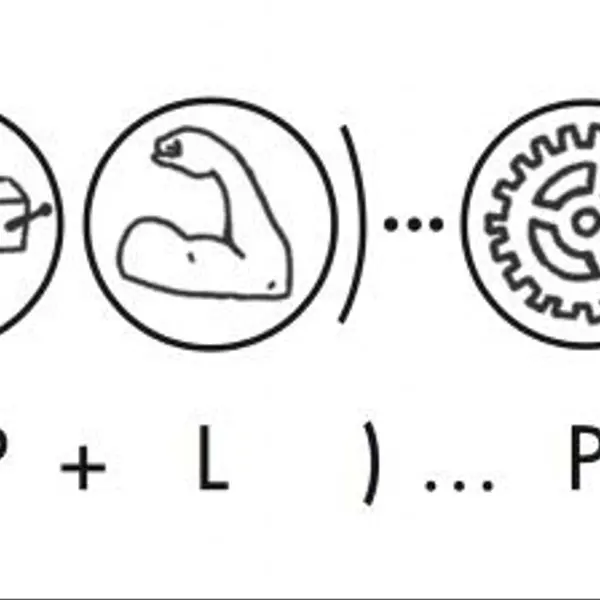
It is better to read Karl Marx than the Irish Independent. The vast majority of people under capitalism live hand to mouth. It cannot be any other way in this system. The “affluent” as described in the article are workers and they are consumers. Marx summed up the experience of most workers with the formula for the circulation of commodities:
C-M-C
In short, a worker does not control productive property, does not have access to capital in the form of “savings” or otherwise, does not have a “portfolio” of property. So to survive, the worker has to sell the only commodity they have - their labour power. So the worker exchanges their commodity (“C”) for money wages (“M”). The worker then takes that money to the marketplace to get the commodities (“C”) needed to live. Since the worker ends the circuit by consuming - food, clothes, car on PCP, botox - they have accumulated nothing. For the worker, the cycle starts again when the wage has been consumed. This is not a matter of habit. Or “social capital”. It is “capital” capital - exploitation built into the system.
This economy viewed from the point of view of the wealthy could not be more different. Marx described the circulation of capital with the formula:
M-C-M’
Exploitation of workers is at the absolute core of this. The “wealthy” advance capital in the form of previously accumulated (stolen) money (“M”) in exchange for commodities (“C”). These commodities are the means of production and labour power. The capitalist is not doing this because they have “good habits” (unless you think legalised thievery is a good habit). They are doing this because the labour power of the worker has the “peculiar property” of producing more value than was invested. The worker produces more than they get back in wages.
This is “surplus value”.
The product is then sold on as a commodity (C’) that has greater value in it than was invested in capital and wages.
This is profit.
The formula for the circulation of capital is inherently exploitative. And this exploitation is the only source of profit under capitalism. This surplus value is redistributed around in various forms. Adding insult to injury, even more is taken from the already exploited worker. Rent, interest on credit cards, interest on PCP, are all forms of wealth that are extracted from workers. The “affluent” as described in this article are harnessed as wage slaves and punished for not shaping up to a lifestyle that is only accessible for the “wealthy”.
Structurally speaking, the “wealthy” are parasites.
You won’t read that in the Irish Independent.
Many on the left, quite rightly, challenge the poisonous racism being spread by the far right. It sets working people against each other. But the message in this article differs only in the form of expression. “Get them out” is not the same thing as “Let’s sneer at our indebted neighbours” but its effect - to set working people against each other - is the same.
This article is an act of ideological policing. It offers a superficial view of a normative, bourgeois standard of living that most cannot measure up to.
But that’s the point. Know your place but know that you’re there because you’re the problem.
Marx put this another way - the ruling ideas in every age are the ideas of the ruling class. Lofty contempt for your underlings “trickles down” and serves to keep the rich rich and the poor sneering at each other.
A Marxist understanding of the economic system protected by such poison should lead workers to understand this: if you read this article and wish you could be “the wealthy” you should know that you will never measure up. How could you? Capitalism demands that the overwhelming majority of people function as workers & consumers; no workers, no wealth & no consumers, no one to go into debt to buy the commodities produced.
C-M-C is where you’re at.
M-C-M’ is for a tiny minority.
I don’t mean to depress you. This can change. Remember that workers are the producers of value. Nothing gets produced unless workers produce it. And if you need to work to survive, no matter what this article is trying to peddle in your general direction, you are a worker. You are a worker. Say it loud. Say it together. This system is grinding and degrading enough without listening to propaganda from the Irish Independent. This system can change. Join a union. Get involved with community activism. Then start to demand a four day work week with no loss of pay. Move from that to demanding increased taxes on the “wealthy”; the tax-dodging, property owning, parasites who look down their noses at you while they enjoy the fruits of your labour!
There is no limit to what workers united can achieve. Which is just as well, because if we want to be truly affluent, really wealthy, we need a workers’ revolution.
 RED NETWORK