To Stop War Social Movements Need The Power Of Workers
26 January 2026
The great power politics of the early 20th century has returned and with it conflicts and tensions escalate around the world. How can we make opposition to war have a real impact? The EU commitment to spend €800 billion on defence, while the US has raised their arms budget to $1 trillion, signals a move towards further imperialist wars.
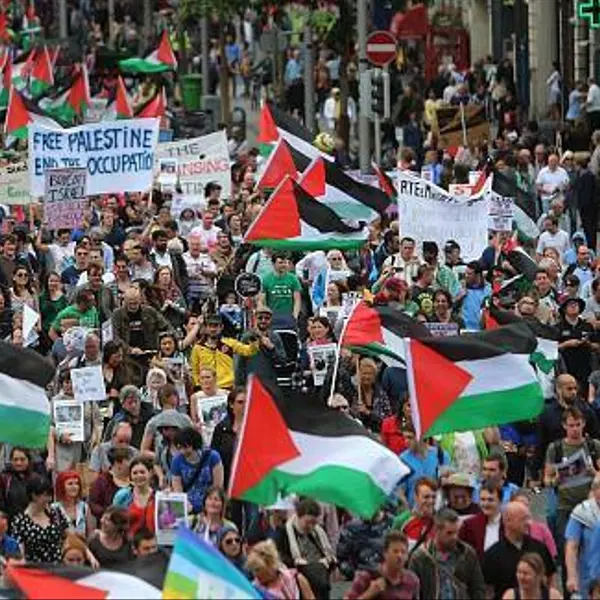
The destruction of Gaza and genocide of the Palestinians by the Israeli Apartheid state has horrified millions of working class people across the globe. Millions of people in Europe and the US have taken to the streets to protest the complicity of our governments in the war in Gaza, despite a serious crackdown by the state in places like the UK and Germany.
Trump’s kidnapping of Venezuelan president Maduro and his threats against Greenland shows the true nature of the United States as an imperialist aggressor - Trump has just taken the mask off. The potential trade wars initiated by Trump’s tariffs are similar to the trade wars that were the precursors to World War 1.
While the ruling class will use all the propaganda tools they have to convince the working class that wars are necessary for the stability or safety of the nation, the truth is that wars are necessary for the capitalist class to maximise their profits. It’s the rich sending the poor off to die for their continued parasitic profit making. Whether it’s for oil, natural resources or geopolitical reasons rival capitalists use the state machinery to capture or subdue territories for themselves.
Working class opposition to war is based on the understanding that war is a necessary consequence of capitalism. War is corporate economic competition spilling over into military competition.
While some workers can be hoodwinked by the propaganda of the ruling class, the advanced workers know that it is our class that suffers from the death and destruction of war, not the rich. When workers start fighting back against war, not just as participants in a social movement but as workers, it can have a significant impact.
A worker who attends a protest against Palestine is participating in a social movement, but a worker who for example refuses to handle Israeli goods is using their power as a worker. The boss class worry about their profits more than anything else.
Protests like the water charges were a great example of how mass protest, accompanied by direct action and boycott, can bring the establishment to heel. But the power that workers bring to bear can terrify the bosses and force concessions.
One of the best examples of this is the irish workers in Dunnes Stores in the 1980s refusing to handle South African goods as part of the boycott campaign against South African Apartheid. More recently, dock workers in Italy, Greece and Belgium have refused to handle Israeli goods or arms destined for Israel.
Opposition to war comes not only from the advanced workers who can see through the deceptions of the rich, but can also come from other classes - a moralist opposition to war can come from the “petty bourgeoisie” (the middle class).
Middle class opposition to war can come from a humanist or pacifist perspective, from a sense of shared humanity and a genuine concern for ordinary people. But because the middle class sits between the working class and the capitalist class they can be influenced by either side. They call for international law to be upheld - instead of seeing international law is a sham.
Some sections of the middle class such as small shopkeepers or those whose business concerns are tied to US corporations support imperialist states while other sections of the middle class such as academics can oppose the imperialist policies of their state.
This middle class opposition to war often takes the form of pacifism, that is an opposition to all war and violence and an abstract call for peace. The main focus of pacifist campaigning is to morally convince the ruling class that war is bad. But you can’t convince the corporations to put aside their profits. They will kill to get hold of resources, labour forces or to deny rivals access.
But working class opposition to war is not based on moralism, it’s based on the understanding that our class is international and that the war we should be fighting is the class war against the capitalists. When workers are forced to fight other workers were not fighting against the rich. This is why the Bolsheviks in Russia called on workers to turn the first world war into a war against their own government, the Tsarist regime. Russian workers did exactly that in 1917.
The main enemy of Irish workers is in the Dáil and behind that puppet show in the boardrooms of the employers.
Just because strikes and workers actions are more powerful doesn’t mean that social movements and street protests against war aren’t important. They send a message to the ruling class and, more importantly, they help give confidence to workers to take the struggle further. This is why socialists always support protests and marches.
But street protests and social movements are not enough to stop wars. In history it has been the actions of workers that have stopped wars most importantly in the Russian Revolution. It was the overthrow of the Tsar by Russian workers, and crucially the establishment of workers power in October 1917, that put a definite stop to the First World War.
Fighting imperialism and war is not just about workers taking action that targets the imperialist war machine. It’s also, and even more importantly, the struggle of workers to overthrow their imperialist governments at home. A revolution in Ireland that overthrew Fianna Gail and Fine Gael and replaced them with workers power would do more to end the oppression of the Palestinians than any mere solidarity movement could.
That’s why any action that makes the working class left more rooted in working class areas and in the workplaces is so important. Waving a Venezuelan flag on O’Connell St Dublin might show solidarity but we are still as far from workers’ power in Ireland as we were the day before that.
We have to ask - how does this action bring us closer to the working class and closer to the overthrow of the Irish establishment? We have to ruthlessly pursue building a socialist left that’s organic to the working class and can bring workers’ power to bear on every issue.
Fighting on every issue that matters to working class people, from housing to bus routes, while bringing wider politics into those movements, actually leads us down the path to workers’ power. The Irish ruling class are junior partners of the imperialist system. By overthrowing them we make our real contribution to international solidarity.
 RED NETWORK