Red Statement: War Inflation Shows Need For Planned Economy
10 March 2026
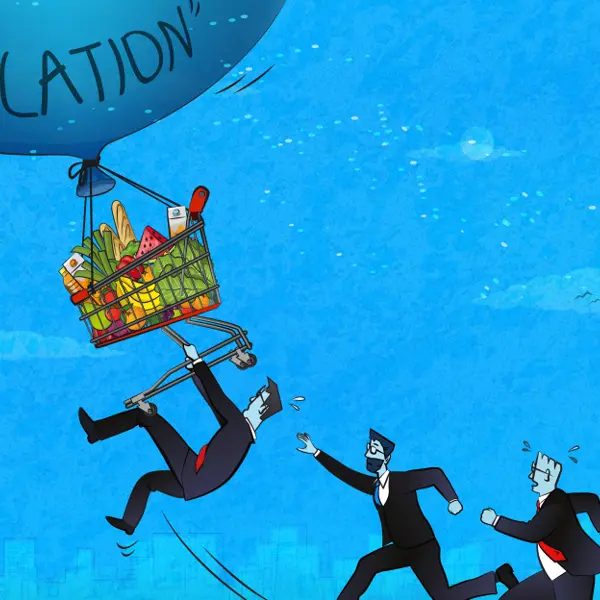
On Friday, the International Monetary Fund managing director, Kristalina Georgieva, said a 10% increase in energy prices would lead to a massive inflation spike and slow global economic growth by 0.1 to 0.2%.
Even before the Trump regime had started dropping bombs on Iran, Ireland was facing rising inflation. The so-called “harmonised index of consumer prices”, the inflation measure the European Central Bank uses to set interest rates, was up to 3.2% in November last year, well above the eurozone average of 2.1%.
On February 28th, European natural gas prices spiked by about 60% after initially doubling in the first two days of that week. Then Qatar shut down production of liquefied natural gas, choking off 20% of the entire global supply.
Ireland may not get fuel directly from the Middle East but prices are set internationally and a rush to buy before prices escalate further can lead to rising prices. The Central Bank of Ireland estimated that a 13% rise in oil prices could reduce Ireland’s GDP by 0.5%, although it would take 3 years to ripple through.
Rising gas prices lead to rising energy bills. Irish electricity prices directly track the price of gas because just under one third of power here was generated by gas in 2024. There are already 320,000 people in arrears with their energy bills.
This rise in fuel costs and energy bills comes just as the Fianna Fáil, Fine Gael and Lowry coalition phased out energy credits from the Budget this year. We don’t know how long the US and Israel attack on Iran will last but it’s clear that it’s working class people who pay the price for conflict at home and abroad.
Of course, we should demand measures from the government to protect workers but do this without any illusions in what they’ll actually do. There are things that could be done right now like the abolition of the carbon tax, to make corporations pay for climate change, not workers.
But the problem is firstly, Fianna Fáil Fine Gael aren’t interested in taking the pressure of workers, they’re puppets of the rich. And secondly, they don’t control the market and whatever measures they undertake the corporations are still in the driving seat. That’s the problem.
Take the Labour Party for example. They’re calling for the government to use the Consumer Protection Act of 2007 to introduce maximum price orders on home heating oil. In practice, price caps often mean the state subsidising private energy companies to maintain supply. Public money is then used to stabilise profits while the underlying system remains unchanged.
As long as supply is in the hands of big corporations they can simply withhold supply until the government plays ball and gives them what they want. Energy is essential to human life yet is left to market competition between giant corporations to decide who gets access.
We would welcome price caps as a temporary measure to take pressure off working families. But it won’t solve the problem and the cost of subsidising these corporations will be borne through taxation which falls on workers, not the rich.
The best thing Labour could do would be to stop using their influence over the main trade unions to hold back strike action. Strikes by workers are the best way to force any government to concede to demands that favour the working class and although ICTU has called for wage increases they seek to get these with as little action as possible.
The Social Democrats have called for a €400 energy credit to be paid out to 800,000 households. This works as a temporary stop gap to help workers. But it’s essentially the state paying off the energy companies, who continue to make money from the crisis.
People Before Profit has called for state owned grocery stores to offer food at lower prices. A good idea but it doesn’t work in isolation. If corporate farms and suppliers still control supply chains they’ll cut you off until they get the profit margins they want. They’ll go on strike.
Then the state ends up paying them off to provide subsidised goods to workers. Then your subsidised groceries are loaded onto trucks bound for places where they don’t have subsidised groceries, where they can be sold at a profit.
You can’t avoid the necessity of controlling the entire chain and that can only happen if workers are in the driving seat of a planned economy. A planned economy can’t control global supply chains or stop imperialists from starting wars but it could make sure that the costs of such external shocks are not borne by the working class.
Instead of private suppliers passing higher costs directly onto households, a publicly owned worker run energy system could absorb and smooth price fluctuations to protect working class living standards. A whole series of profiteers would be removed from the equation.
A planned economy could build up reserves, quickly move to sustainable energy production, negotiate long term state to state contracts and make mass purchases which drive prices down. A focus on sustainable energy production would make us less reliant on external markets.
While capitalism distributes goods and access to energy according to who can pay, a planned economy can prioritise and allocate according to need. Under capitalism external shocks are mediated by governments who put profit first. Under socialism we’d democratically decide as workers how best to deal with it.
We will continue to fight for any measure that helps workers here and now. The best way to win immediate relief for workers is protest and strike action, not begging Fianna Fáil or Fine Gael.
But we Reds openly say to other workers that unless we rise up and put the working class in charge of a planned economy, where all decisions are ratified by assemblies of workers, our fate is in the hands of the boss class.
 RED NETWORK