Housing For All? The Shameful State Of Social Housing In The North
3 June 2026
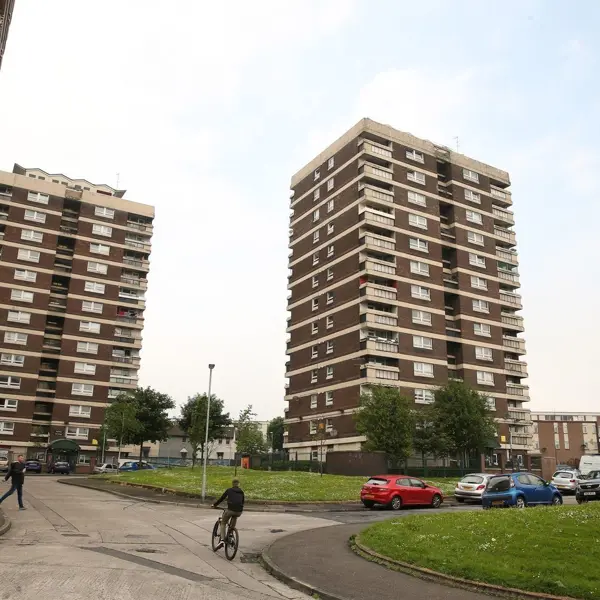
The social housing waiting list in the North has now surpassed 50,000 households. 33,000 of these are listed as “full-duty applicants.” In other words, homeless. This situation did not occur overnight.
For the past decade the number of households on the waiting list has grown by 30%. Yet, the Stormont Executive’s plan to solve this crisis only includes starting work on 5,850 new social houses by 2027.
This is well below the number needed to address the shortage. And yes, that’s only starting work on the homes, not completing them. Furthermore, it looks like they will not even be able to meet this pathetically low target, as Stormont has still not reached a decision on their 2026 annual budget.
If this wasn’t bad enough, their homeless action plan has still not materialised 18 months after it was announced. Plus, a scheme aimed to buy 600 houses for temporary accommodation has still not sourced a single home.
Few will be surprised by this inaction and incompetence. The Stormont Executive is an utterly dysfunctional system, where meaningful change is nearly impossible to bring about. Only 1 in 4 people believe that Stormont has improved their lives since its restoration two years ago.
As ever, the DUP also stands in the way of assistance for working families on the waiting list. Last October, their Communities Minister, Gordon Lyons, cut public funding allocated for social housing. Cutting funding for social housing during a housing crisis? This should be a top priority!
But this is hardly surprising, given that many DUP politicians are also private landlords. In fact, two of these landlords actually sit on and hold decision making power on the board of the Housing Executive! This is a massive conflict of interests and lays clear the class character of these individuals and the party overall. They are not on any workers’ side!
It has been revealed that many of those on the housing waiting list are there because private rentals have become too expensive. The Chief Executive of the Northern Ireland Federation for Housing Associations states that: “We are seeing people who are being priced out of the rental market and then having to present themselves as homeless to the Housing Executive.”
So no new social houses are being built or acquired by the state, forcing families to turn to the private rental market, which they cannot afford. They are then left to languish in unstable, temporary accommodation and on an ever-increasing waiting list.
This is an utterly hopeless situation that no working family should have to endure. The truth is that there are an estimated 20,000 vacant homes in the north. Many of these are owned by private landlords and deliberately kept empty. This allows them to create a false shortage in housing, and hike the prices of the limited private rentals that are available.
Private landlords are parasites that serve no societal function. They exist solely to line their own pockets with the hard-earned money of working people. And the fact that parties like the DUP are aligned with their interests over that of their working-class voters should be visible to all. They work hand in glove with the landlords and bosses to extract profit from workers that are already being pushed beyond their limits.
Unfortunately, there are still those who have drawn false conclusions to the cause of the housing crisis. Namely that it is the result of “unchecked” immigration and the housing of refugees/asylum seekers that prevents local people from having affordable homes.
The recent bout of HMO attacks is the latest example of this far-right agenda. HMOs (House in Multiple Occupation) are being used in some cases to house some of the refugees that were displaced by the winding down of the British government’s migrant hotel scheme.
For a start, asylum seekers make up under 0.1% of the population, by far the lowest anywhere in the UK. It is therefore mathematically impossible for them to be the source of the crisis. There is perhaps merit to the claim that some private landlords are profiteering from the government’s HMO scheme. If this is the case why don’t these groups target their anger at the profiteers, not the vulnerable people who are given no choice where they end up?
Additionally, the number of HMOs per area is generally limited to a small percentage of all available private rentals. The area that has been found to have most exceeded this limit is in fact the Holylands area near Queen’s University, which is populated almost exclusively by students. Where is their anger here at the rules being broken at the expense of local residents? And where are they when the likes of CATU are demonstrating against the lack of social houses in the estates? They are nowhere to be found.
Their agenda is sheer racism, masked by a concern for housing. They would rather see a house with smashed windows and left abandoned than housed by someone not originally from this country. They refuse to draw the correct conclusions that this crisis is the fault of landlords and a capitalist system that puts profit ahead of all other interests. Instead they choose to target vulnerable migrants and refugees, many of whom have fled wars and other crises caused by the very same system.
Scapegoating migrants and refugees is exactly the same tactic as the sectarianism of old. It only drives a wedge through the working-class, preventing any chance of unity and a real fightback against the exploitation of landlords and the bosses.
The time for sectarian politics is long over. Protestant working people have far more in common with Catholic workers on the other side of the peace-wall, as well as the migrants and refugees that have come here seeking a better life. We simply do not share the same class interests of any unionist landlord, MLA or boss. It is the role of every socialist to expose these opposing class interests and prevent any new attempts to divide workers.
So, what short-term actions can Stormont take to bring an end to the housing crisis?
Firstly, they must restore Lyons’ cuts to public funding for social housing. He has since gone on to blame a lack of engagement from other departments to provide public land for the new builds. If this is true, it must be made a priority for all departments to co-operate and stop passing the blame for their failures. The stakes for families are simply too high. Furthermore, a full evaluation of vacant properties should be undertaken and real efforts made to acquire them for social housing.
As for us workers, we should also start to organise within our unions and pressure them to stand on these issues. The Irish Congress of Trade Unions should be rallying its 800,000 members North and South and mount a mass campaign to tackle the issues most impacting its workers; namely housing and overall cost of living. The more of us that get actively involved, the more we can press the union bureaucrats to actually act in their members’ interests.
In the long-term, we in the Red Network would advocate the creation of an all-Ireland state construction company. Under workers’ control, this would be used to build universal public housing. Additionally, we would enforce serious rent controls, a ban on evictions, take back vacant buildings, and resource all new estates.
But this cannot be achieved at Stormont or the Dáil.
The time has come for the end to partition and for workers on both sides of the border to create a bold new future for this island. Both capitalist-run parliaments should be dismantled, putting workers in the driving seat of a worker-run state made up of democratic workplace, industry-wide and community assemblies which will elect delegates to a working class national assembly.
Only with workers in the driving seat of a planned economy, north and south can we truly put an end to landlord parasitism and capitalist exploitation.
That is the future the Red Network is fighting for and we invite you to join us in the struggle. It is the only way to make sure that no working family will ever have to worry about having a roof over their head again.
 RED NETWORK