What The By-Election Votes Show
4 June 2026
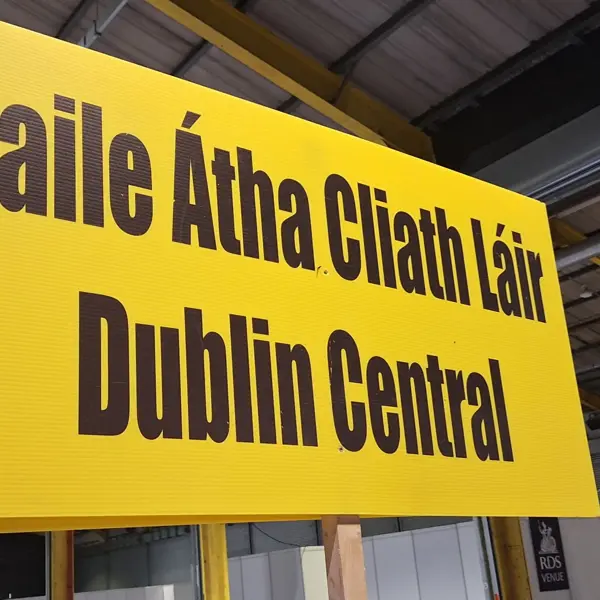
The recent by-elections in Dublin Central and Galway West have given rise to discussions about the decline of the government parties, in particular Fianna Fáil.
Fianna Fáil had a particularly bad election, in both constituencies. They only managed to get 4% in Dublin Central, the worst performance for the party in their century long history. You’d expect them to do better outside Dublin but they only got 8.8% in Galway West.
Fine Gael on the other hand managed to take a seat in Galway West, which was the only the fourth time in 44 years that a government party has won a seat in any by-election. Because of the nature of by-elections they tend to favour opposition parties. There is less at stake so there is an opportunity for government supporters to show a bit of dissatisfaction, and there are generally less of a focus on election promises to buy off voters.
Adrian Kavanagh argued in his blog that: “the level of decline in the combined government party support levels was a good bit lower than the average for the (percentage) loss of government party support at by election contests over the last four and a half decades” meaning the government parties didn’t lose out as much as they normally do in a by-election.
The national Red C poll taken just after the by-elections shows some further decline for Fianna Fáil to 15% while Fine Gael went up one percentage point to 17%. This poll shows clearly the disparity between the by-election results for Fianna Fáil and what they’d actually get in a general election.
They are at a historic low point but the combined establishment vote in the by-election by no means indicates they’re finished off. Particularly if the soft left get their way.
The peculiarities of by-elections means that you need to have a bit of caution when comparing those results to any upcoming general election result. You can’t take the results and assume that they will be similar to a general election. That doesn’t mean that by-elections results aren’t useful to gauge the mood of the masses. They can show general trends in political consciousness.
The by-elections offer a snapshot of the mood in two constituencies. Considering the very different nature of both constituencies they show some similar and some different trends. One is the growth of the Social Democrats as a soft left alternative to the establishment, particularly in the urban white collar working class and among the middle class.
The Social Democrats are the replacement for a Labour Party discredited by a stint in power during the austerity years. And if Holly Cairn’s comments about talking to every party are anything to go by they’re willing to repeat all of Labour’s mistakes.
The second clear trend is the continued hold of right wing, establishment politics in rural Ireland. Just as Labour split into Labour and the Social Democrats the establishment leaked TDs who dressed themselves up as “independents” to guarantee themselves re-election. But as Michael Lowry demonstrated, they’re willing to prop up the government when needed.
The huge vote for Independent Ireland’s Noel Thomas can be regarded as something of an anti-government vote, but it’s also very much still an establishment vote. Thomas is a former Fianna Fáil councillor and part of that gene pool. Much of Independent Ireland’s base is the former grassroots of Fianna Fáil who were unhappy with the tactical turn the establishment took after the bank bailout - they pivoted to issues like Marriage Equality and Repeal to desperately regain votes.
A general disconnect from politics is clear in the low turnout - in both areas it was below 45% (43.5% and 44% respectively). Most people who were registered to vote didn’t vote and even they don’t represent all the voting age adults who could have registered to vote.
In Galway West the establishment pool - made up of Fianna Fáil, Fine Gael and Independent Ireland combined got 49.8% of the vote. Considering that the seat was vacated by Catherine Connolly, a reformist left independent, there would have been an assumption that there would be a stronger left vote here.
The left vote mainly went to the Labour Party, which is not very surprising considering Catherine Connolly used to be Labour before going Independent. They got an increased vote of 11.4%, while the total combined left vote was 28.7%. Labour gained 8.1% while Sinn Féin dropped by 6.8%.
The only radical left candidate that stood in Galway West was People Before Profit’s Denman Rooke who got just 1.1% of the vote, a 0.4% drop in their vote.
In Dublin Central Sinn Fein’s Janice Boylan was expected to take the seat and join Mary Lou McDonald in the Dáil. But the Social Democrat candidate Daniel Ennis managed to not only top the poll but to stay ahead on transfers all the way to the end.
The only radical left candidate to contest the election was People Before Profit’s Eoghan Ó Ceannabhán. His vote share increased from 4.5% in the 2024 general election to 6.8% in the by-election. This is a good result for People Before Profit, however it needs to be considered that there was more than one radical left candidate in the 2024 general election.
Former MEP Claire Daly stood for Independents For Change and the total vote share of the radical left in 2024 was 8.5% between PBP and Daly. The transfers from PBP in the by-election shows a 2 to 1 ratio to the Social democrats rather than Sinn Fein. Most of their transfers went to the Social Democrats.
The Green Party got almost the same amount of transfers as Sinn Féin from PBP voters, 400 compared to 430 to Sinn Fein. This means that most PBP transfers went to that part of the left with a base in the white collar working class and middle class. In PBP’s former heartlands like Dublin South Central their transfers were more blue collar and leaned towards Sinn Féin.
This says something about the nature of the PBP vote in Dublin Central, that it’s more white collar and middle class rather than a blue collar working class vote. The box by box tallies show this too. For example, in boxes for blue collar areas such as Dominick St, Gardiner St and North Wall PBP polled at between 3% and 4% while higher votes came in areas like Stoneybatter and Phibsboro.
The tallies show the strong vote for Hutch and Steenson, who both increased their vote, is very concentrated in certain deprived areas of the constituency. This indicates significant, and growing, support for the populist and far right in the blue collar estates. In many boxes the combined Hutch/Steenson vote was the biggest pool of votes.
This is a very dangerous development in areas like the North Inner City where blue collar estates have been neglected for decades and are surrounded by swanky offices and million euro apartments. The only way to win back support for the left in these estates is to do consistent hard work for a long period of time on issues like housing and cost of living.
In most blue collar estates the voters were divided between the populist/far right and Sinn Féin. The Shinners came out on top in the Cabra West boxes but were closely followed by the pool of far right votes. Sinn Féin, as the biggest opposition party, was out-polled by the Social Democrats in both constituencies.
They have continued to lose momentum since their polling results after the 2020 general election. They were up to 36% at one point. People see them as a “flip-flop” party. But when Paul Murphy says that Sinn Féin must make a choice on whether to turn to the left or right, he is either misunderstanding or deliberately obscuring the fact that this flip-flopping is built into the very nature of Sinn Féin.
Sinn Féin have the seal of approval from Davy Stockbrokers who said “they’re more Tony Blair’s New Labour than Corbyn”, promising the bosses that a Sinn Féin government wouldn’t upset the apple cart. That’s why Sinn Féin lost so many votes, they were so focused on ministerial seats they were seen to have left struggle and their voters behind.
While many of their supporters are blue collar working class and their members see them as a party for the working class (David Cullinane even said this on “The Week in Politics” this week!) the fact is that the Sinn Féin leaders represent a wing of the middle class.
Why? Because they sell the utopian idea that you can keep the bosses happy and also deliver for workers. You can’t, you have to pick a side. So Sinn Féin will continue to flip-flop because it’s built into the DNA of that party. Just like Fianna Fáil in the past, they’ll try to be all things to all people.
We will continue to work with Sinn Féin in campaigns in working class estates because it’s vital socialists engage with their voter base. But you have to pull on that base and win them over.
PBP factions have produced their own take on the elections. Paul Murphy TD, representing the “Rise” faction, and Daryl Horan from the “Socialist Workers Network”. In their post-election analyses they argue that the results show that a left government is now possible on the basis of the by-election results.
This is not only a false interpretation of by-election results (as they aren’t a clear signal of a future general election result) but it’s also a delusion. Not only have none of the soft left parties, including the Social Democrats, ruled out entering coalition with Fianna Fáil and Fine Gael but there is still no indication that there would be enough seats won in a general election for a “left government” to be formed.
The conclusion from both networks in PBP is to “continue to be proponents of left unity and left government”. In reality, they’re calling for a Sinn Féin government that includes the Social Democrats, Labour and the Greens. That’d be a step forward from Fianna Fáil/Fine Gael but not as much of a step forward as PBP like to make out in public.
This is why Paul Murphy admits that they should also “find ways to popularly present rupture with capitalism”. They’re insinuating a left government can break with capitalism and then suggesting the actual left government on offer, led by Sinn Féin, will actually do this. This makes the middle class left look far more radical than they could ever be.
They conflate left unity in struggle (which tests the soft left) with left unity in government (which destroys the radical left). The left isn’t one thing. There are very few left voices in Ireland that actually represent the working class. That means working with the left on the ground in struggle but also fighting for a clear working class voice to emerge politically.
The German revolutionary Rosa Luxemburg argued back in 1911 that: “Above all we should propagate socialist enlightenment in the Reichstag elections.” It’s the role of working class socialists to expose the class nature of the system and to reveal the class represented by each political party, not to mislead workers into thinking that a left government could solve all their problems.
The Red Network wants to see a left government in Ireland. Because it would expose the parties of the middle class left, who claim to represent the working class, it would show everyone their true nature. When they coalesce with the system disappointment can go to further left but it can also go to the right.
This is why socialists urgently need to tell workers the truth about all these parties before these parties take power. Although judging from their overtures to the establishment in the wake of the by-elections we might be waiting longer than the likes of PBP think.
Standing in elections is absolutely crucial. It helps you promote struggle and build a base. There’s no denying that. But the point of standing isn’t to be just another Social Democrat, winning this or that crumb but ultimately helping give the system a left face. We need to put workers in the driving seat - of the left, of our unions, of the state.
The Red Network will always tell the truth to the working class. That is the only way to win the trust of workers and build a fighting socialist alternative. Join us.
 RED NETWORK