Public Pay Deal: Lessons Of Recent Strikes
4 September 2026
Public sector workers undertaking industrial action beginning from the 30th of September should take note of recent strikes, the tactics our unions employed and the governments actions in response.
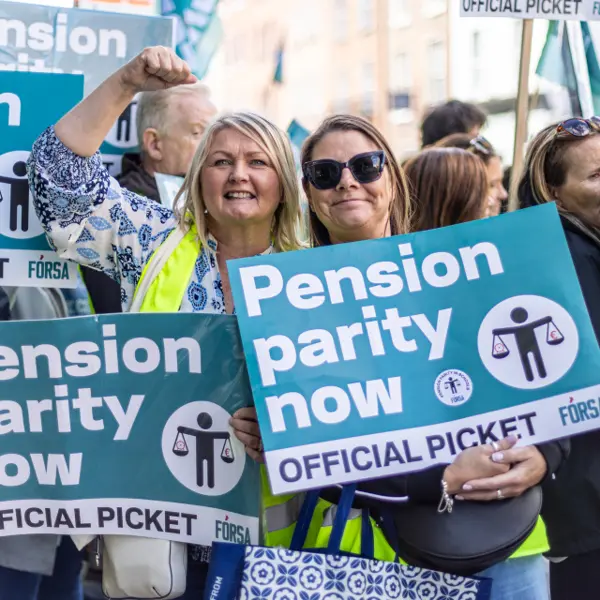
The School Secretaries and Caretakers went on strike last year after a long standing campaign to have their roles recognised as public jobs with pensions in line with other public sector workers.
They also went on strike over pay and sick leave benefits among others and the strike lasted for a week at the end of August 2025 with pickets at schools and rallies held outside key TD’s offices.
The strike was called off by Fórsa with none of their demands met in a show of good faith to enter negotiations. The government refused to meet with any of the demands and the dispute was referred to the Labour Court for a ruling which was only announced nearly a year later in the last few weeks with a vote to follow.
So in total an action which took over a year and a half with workers no better off and completely demoralised.
The “Pay and Numbers Strategy” was a report published by the HSE in 2024 which at the stroke of a pen effectively abolished thousands of frontline jobs such as nurses, paramedics and healthcare assistants in a cynical money saving exercise.
They blocked hospitals from hiring staff then turned around and said that these jobs were no longer needed. The “Pay and Numbers Strategy” has been just another step in Fianna Fáil and Fine Gaels drive to privatise the Health Service and funnel profits to private Healthcare providers and wealthy individuals.
The unions representing health workers opted for a strategy of work to rule and lunchtime protests to make the government reverse the cuts. Again, these actions were stopped before any demand was met to show good faith and enter talks with the government.
The talks concluded with the HSE agreement made in the WRC to address not filling vacant health posts. Of course, there were no actual consequences and a year on there are hospitals at breaking point around the country with low staff levels causing dangerous conditions for the public and staff.
There is no doubt that the years of “social partnership” with union bosses in bed with government has made our unions not fit for the fight. Workers are demoralised because the hard yards put in often result in defeat or a dodgy deal.
But it can be different.
This upcoming dispute and the governments hard attitude is the result of complacency by heads of all our unions. They need to be seen to be fighting for us but they do not have the heart for it and they will crumble as soon as RTÉ News starts looking like they will ask them tough questions on the Six One news.
They will call off any action just as it looks like its starting to be effective and there is a chance we might get some bad publicity.
Our message is simple:
When workers fight together as a class – we can win. We must escalate our actions quickly and unified as workers. Work to rule with mild inconveniences and lunch time protests may bring visibility but they will not make minister for public expenditure Jack Chambers lose sleep.
We need massive mobilisations to show our power in numbers, strike action must be effective and not a token show like previous ones.
Workers can’t afford to lose pay while on strike but we cannot afford to fall further behind inflation by accepting another dreadful pay deal while the cost of living continues to spiral.
When the dust settles there’ll once more be serious questions we have to ask ourselves about winning grassroot’s control of our unions.
 RED NETWORK