Sweden’s Election No Political Earthquake
21 September 2026
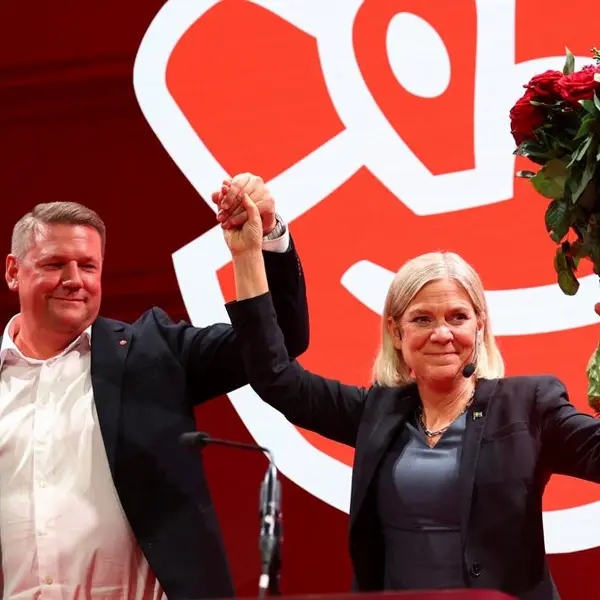
Swedes went to the polls on 12th September. The mainstream media was dominated by the culture war, with a non-stop focus on issues like immigration. But for the majority of voters the priorities were the same issues that face the working class in every capitalist country: health, education and the state of the economy.
According to the exit poll immigration came in only 8th in the list of priorities for voters despite constantly being brought to the fore in media debates. It helps the establishment to avoid talking about the cost of living, privatisation of public services or declining public services.
Government negotiations have now started and a new government will be made up of the Social Democrats, the Greens, the Left Party and the Centre Party. The Social Democrats are like New Labour in Britain, the Left Party is the former Communist Party, but they just tail the Social Democrats. The Centre Party is made up of farmers and they usually support the right.
This coalition will replace a right wing Tory style government made up of the neo-liberal Moderates, the Christian Democrats and propped up by the far right Sweden Democrats. The Sweden Democrats were willing to support a Tory style government and huge attacks on workers.
The shifts in party support were very small compared to the last election. The biggest change was the drop for the Sweden Democrats, from 20% to 17.5%. The second biggest drop was for the Social Democrats, but only by 2.3 percentage points, from 30.3% to 28%.
The last election in 2022 saw the continued rise of the far right Sweden Democrats as it became the second biggest party. They entered into an agreement to support the neo-liberal Moderates Party in government, similar to the confidence and supply agreement between Fianna Fáil and Fine Gael in 2016-2020.
This showed their true colours as an anti-worker party that uses culture war rhetoric to disguise their support for the current system.
This election saw the Sweden Democrats drop back into third place. According to the exit poll their support had fallen particularly among young voters. In the 18-21 year old group they fell from 22% to just 15%.
In terms of demographics they dropped significantly among blue collar workers from 29% to 25%. In white collar workers and employed managers, they dropped from 15% to 12%. Their smallest drop was among farmers and business owners where they only dropped one percentage point from 24% to 23%.
This is indicative of their pro-establishment neo-liberal politics. Their time supporting a Tory government started to expose their real face to workers.
Sweden Democrat representatives blamed their drop on lower voter turnout and the fact that they have for the first time “taken responsibility” as he put it. What he meant was that the Sweden Democrats’ close cooperation with the neo-liberal government led by the Moderates had hit their votes.
There has been an interesting shift in the Sweden Democrats voter base. For example, 81% of SD voters now identify as right wing compared to only 58% in 2018. More of them also believe that the party leader is important at 82% at this election, compared to only 49% in 2010.
On the other hand, the Left Party (the former Communist Party, now tamed and junior partner of the Social Democrats) gained 1.5% to get 8.2% of the national vote. They did so not on the basis of a principled socialist programme but on a fairly clear commitment to joining a capitalist government led by the Social Democrats.
One of their representatives Ali Esbati said that: “The Left Party has had very few red lines.” He continued to say that he thought it was “natural” that it will be a “four party government”. Those four parties would consist of the Social Democrats, The Left Party, The Centre Party and the Green Party.
The Social Democrats have overseen as much austerity over the years as the Tories. They are an establishment party. And the coalition would include the farmers alongside the middle class Greens. Such a government will not deliver for workers and the result will be further political stalemate.
10% of workers voted for the Left Party, an increase of only 1 percentage point since 2022. Promising to enter government didn’t make them any real gains.
With two clear potential government blocks emerging early in the campaign (one centre-left and one centre-right/far-right) the choices for non-establishment voters were limited. No revolutionary left parties were able to reach above the 4% limit for the Swedish parliament. Many of them boycotted the election completely while others stood only in local or regional elections.
The small Trotskyist party Socialist Alternative won two seats in the local council in Luleå in the north. In Gothenburg the Communist Party got 0.5% of the vote, they got under 1% of the vote in most other areas apart from Lysekil on the west coast where they won one council seat with 4.6% of the vote.
An electoral alliance of Trotskyists, feminists and former Left Party members only managed to get 0.4% of the local election vote in Stockholm. Another radical left but not explicitly revolutionary party, the Workers Party, got 3.3% and two council seats in Umeå in the north.
The election results in Sweden gives an insight into the decline of working class politics in the country. The Social Democrats are a thoroughly establishment party although they still have a working class voter base.
The Left Party is making inroads into the Social Democrats’ voters in a mild reformist socialist space. With working class struggle at an all time low this is not surprising. Workers’ anger over cost of living, unemployment and privatisation is being contained by the Social Democratic trade union leadership.
The anger then turns into demoralisation and significant electoral support among blue collar workers for the far right. If you don’t mobilise anger it becomes sullen frustration and bitterness which then seeks an outlet. The union leaders who complain about the far right are the ones fertilising the soil of demoralisation from which division can grow.
The same crisis of working class leadership that we see in Ireland can be seen in Sweden but at an even larger scale. There is no revolutionary left that has a strategy to re-build real working class leadership. So politics is Sweden is a stalemate.
The lessons to be learnt is that we need a party of worker leaders that is both principled in its politics and engaging with the working class on all day to day issues. You need to do both. That’s what we are doing in the Red Network, if you agree then join us.
 RED NETWORK