Northern Doctors Back On Strike
23 November 2026
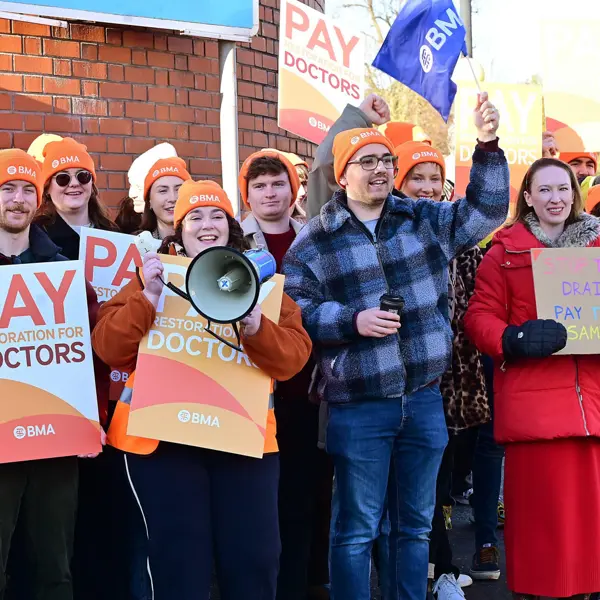
Resident doctors in the North were back on strike on Friday 20th November, with further strike action planned by senior doctors on Monday 23rd November. This follows similar strikes by resident and senior hospital doctors back in June, after their union, the British Medical Association, rejected an inadequate proposed pay rise of 3.5%.
While UUP Health Minister Robbie Butler argues that this is above the rate of pay offered to other health professionals in the North, the BMA has rightly pointed out that this still falls well short, given the many years of below-inflation pay rises dating back to the 2008 financial crisis and following years of austerity.
According to their figures, consultants are paid 26.4% lower in real terms than they were 18 years ago, with resident doctor pay 20% lower.
It is worth noting that emergency hospital care will still be available during the strike, although many outpatient appointments will be cancelled, with notification given in advance to those patients affected.
It is therefore disgraceful that Butler and others in the media have attempted to blame striking doctors for adding to the hospital waiting lists. The strike in June led to around 2,200 appointment cancellations. The hospital waiting list is estimated to be over half a million.
It’s quite frankly ridiculous that a sitting health minister would attempt to shift the blame from his and his predecessor’s disastrous mismanagement of the health service and pass it onto the very doctors that are keeping the health service afloat under enormous pressure and not even being paid fairly for their efforts.
So much was made about the heroic efforts of NHS doctors and nurses during the Covid pandemic. It has not taken long for their sacrifices to be forgotten.
Aside from the legacy of austerity and the continuing underpayment of the health service in the North, the underpayment of resident doctors (formerly known as junior doctors) is also a huge issue when it comes to staff retention.
They are paid well below their counterparts in the mainland UK or south of the border, which has led many to leave NI to seek employment abroad, including further afield in the likes of Australia.
The health minister argues that his hands are tied, due to the inability of the Stormont Assembly to agree on a budget, eight months into its tenure. So he is currently unable to carry out the proposed 3.5% pay deal, let alone anything higher. This once again highlights the complete dysfunction of Stormont as a political system and its inability to enact anything that materially benefits our class.
However some of his other comments are quite telling for why he does not wish to agree to a fair deal, stating that doing so would lead to “significant repercussions for nurses, teachers, police officers and indeed the entire public sector workforce”.
And why shouldn’t it? Other members of the public sector are just as hard pressed by rising inflation and cost of living. NIPSA has just announced the results of its health and social care ballot: 94% of members in favour of strike action.
Unite and UNISON will also be balloting their own members over the next week, while Unite also plans to ballot their Education Authority school support workers.
If the doctors are successful in getting their way, it opens the door wide for the rest of the health service and indeed the whole public sector to make similar demands for above inflation, real-terms pay deals.
As we have seen in the South, the public sector strike of October 14th mobilised over 300,000 workers and helped rebuild much needed worker confidence in their own collective power. It’s just a shame that union leaders pulled the plug on both other planned strike days and settled for a shit pay deal from the government.
But with a strong movement against this deal from grassroots workers, the matter is far from over.
Northern public sector workers should look to this as both an example and a warning. Withholding our labour is the one sure-fire way to bring the government or other bosses to heel. But also once this fight has been initiated, grassroots workers must keep their foot on the gas and push industrial action and union leaders as far as possible.
It is for these reasons that other workers should ignore the scaremongering in the media and from the health minister and fully support the doctors on strike. They have been pushed to breaking point over the past 18 years, especially during the pandemic and since.
They don’t want to be out on strike. They want to be doing their jobs, keeping us healthy and saving our lives. But in order to do this, issues with pay and staff retention must be resolved and this strike is the only way to make the government listen. Now is the time to fight back.
 RED NETWORK