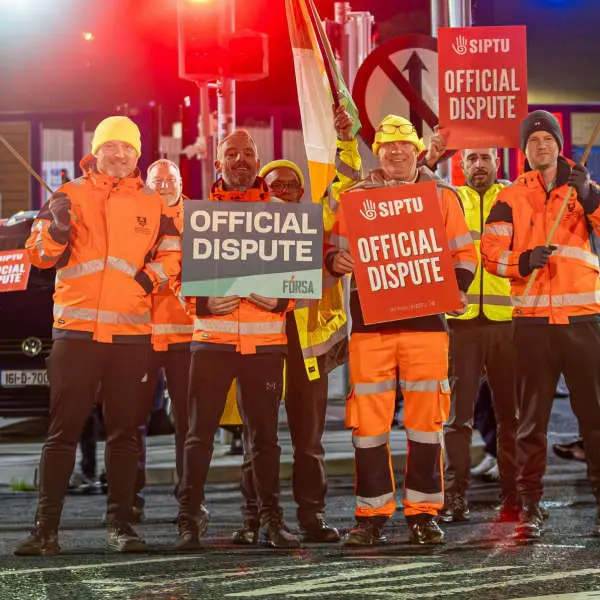
Public Sector Workers Voted For A Fight.
19 November 2026
When public workers went out on the pickets in October, the level of support was overwhelming. Cars and buses honked their horns to greet the strikers, people passing by cheered them on - it felt like the unions were unstoppable. With 77% of the general public in support of the strikers, the government was sure to have to cave if the unions had kept pushing them.
Better yet, after some hesitation for a second round of strike action, the unions called a 24 hour strike in the middle for November 12th the EU Summit. All the top leaders around Europe were set to be in Dublin for the 12th, and the unions were about to give them the welcome they really deserved!
That was sure to wipe the grin off Jack Chambers’ face.
But then, at the last moment, strikes were called back. The unions all started talking about a ‘breakthrough’ in the negotiations. Members were cautious, but maybe the government had caved under the threat of embarrassment?
Then, the deal was released. It was clear to anyone that the only breakthrough that was made was in the union leaders’ willingness to sell out their own members. The deal does nothing for members already barely able to afford the cost of living, with a pay increase that’s just under inflation. It doesn’t address the extra 72 hours SNAs are forced to work nor the unpaid Croke Park hours for teachers.
The deal also comes with productivity and ‘flexibility’ demands, putting an even greater burden on workers, and a demand to make workers train AI systems so that management can downsize further in the future.
The union leaders went into negotiations with major leverage over the government, and they left with a deal where the state is making demands on workers! To make matters worse, the deal is going to put local bargaining on ice, with some local disputes held up until 2029.
With negotiators like this on the union side, who needs Jack Chambers standing in for the government?
Many workers are furious. On any union page announcing the deal, you’ll see comments calling the union leaders out on their cowardice. Multiple unions have even turned off the comments on their announcements, too afraid to face up to their own members.
In meetings on the deal, union leaders are making sure to host online to avoid having to look their members in the eye, SIPTU is even vetting questions before they’re asked so they can’t be challenged by ordinary workers!
But, online and in the workplaces, anger is brewing. Public sector workers know this deal is poison. The pay “rise” is an effective pay cut, and it comes with a million stipulations that will leave workers more at the mercy of their bosses. Public workers feel betrayed that the leaders they trusted to represent them could so easily sell them out, but the fight isn’t over yet!
The unions still have to ballot their members to ratify the deal, and with the level of fury seen from membership there’s a real chance that workers can send them right back to the negotiating table. A strong no vote can force further strikes.
However, the union leadership is doing their best to distract and mislead their membership, hosting public meetings where they tell bold- faced lies about the merits of the deal. Meanwhile, Jack Chambers brags to the press that he’s prepared to tear the agreement up at any moment pending “changing economic circumstances”.
That means that at any moment unions could be drawn right back to negotiations by the government, the only difference will be that membership will be left less confident in its leaders and more discouraged. If public workers take this deal, the most militant among us who fought to get pickets in order, and spent every moment on the ground with their coworkers, are at risk of leaving the unions in droves.
Don’t leave, stay and vote no!
The union leaders will be all the merrier to see people like us leave. While they declare their commitment to a united workforce and a solidarity built from the grassroots membership upwards, they fear the anger of ordinary members who recognise their posturing.
Instead of losing some of our most dedicated organizers to apathy, we need to confront this deal with all of our strength. Instead of bitterly resigning ourselves to the inaction of our leaders, we need to band together with our coworkers, with other workplaces, and across every union to form a unified challenge to these bureaucrats.
Whether by conversation in person, posting online, or at meetings held by the unions, we need to make sure that members upset by the deal aren’t left on their own. By aiming the anger of members straight at this deal, we can shake the union leadership from its complacency, fight for, and win something that addresses ordinary members’ conditions.
 RED NETWORK