Class War Not Culture War: A Reply To Paul Murphy TD
23 September 2025
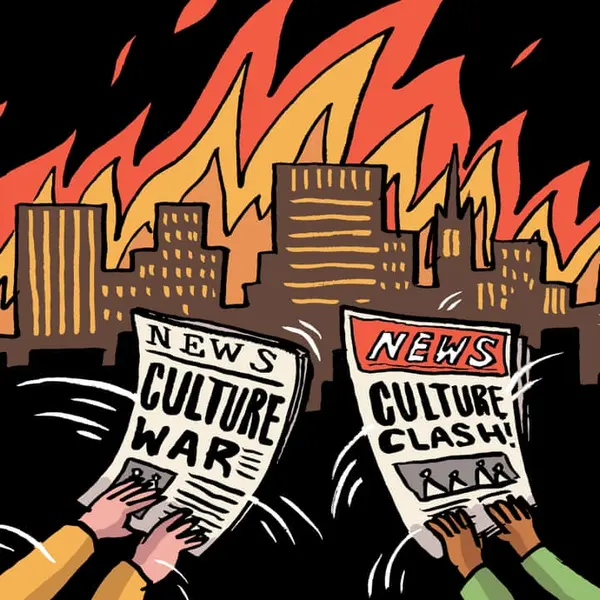
Paul Murphy TD has decided to write a review of my book “Class War, Not Culture War”. I welcome debate on these issues but it is unfortunate that his article is full of strawman arguments and misrepresentations of both my book and the Russian revolutionary Lenin’s positions. Because some might read Paul’s review and from that develop a pre-conceived idea about my book, there is a need to clarify what my book is, and what it isn’t. My book is an attempt to clearly define the ruling ideas of our times, that is the culture war and through Marxist analysis set out the relationship of each class to those ideas. The book sets out to show how the ideological battles of our age are rooted in and shaped by the interests of various classes under capitalism.
Paul Murphy claims that the book asserts the culture war is to be exclusively understood as a ruling class conspiracy, consciously employed to deceive workers and divide us. In fact, the book shows the social and historical roots of various oppressions before showing how the culture war is not one homogenous social phenomenon but in fact means different things to different classes. It explains that the non-proletarian classes do not always act consciously in their propagation of ideas and beliefs which is why you see representatives of capital and of the petty bourgeoisie (the middle class) on both sides of culture war debates. Beyond the surface appearance however, and beyond their own limited class consciousness, they have a desire to act in the economic interests of their class. Any debates or ideas that obscure and obfuscate the question of class is in their interest, whether they know it or not.
Paul completely ignores the books’ understanding of the role of the middle classes - the old and new petty bourgeoisie. An understanding of the petty bourgeoisie is vital in structuring an understanding of the culture war. Ideas don’t fall from heaven and must be ultimately rooted in class interests. The starting point for any discussion of ideology under capitalism has to be Karl Marx’s comment that: “The ideas of the ruling class are in every epoch the ruling ideas, i.e. the class which is the ruling material force of society, is at the same time its ruling intellectual force.”
The capitalist ruling class is torn into two main wings: One employs a liberal mask to maintain exploitation, while the other wants to return to authoritarian forms of rule. In the US there’s a split between Democrats and Republicans, both loyal to the billionaire boss class. They have an economic identity yet a political difference. My book outlines this economic identity without reducing political conflicts to this class identity alone. Both sides of the conflict feel it’s an existential question for their class - one thinking if they push too hard the workers will rise, the other believing they have to push harder. The capitalist class is a small minority and despite their hegemony over media and general forms of thought they need help transmitting their ideas to the mass of people, who are workers.
This is where the petty bourgeoisie comes in. The traditional petty bourgeoisie is made up of farmers, artists - all those who directly produce a good or service for sale themselves. They are half capitalist and half worker. There’s also a new middle class made up of corporate managers and HR bullies who oversee the labour process for capital. The old and new petty bourgeois too are torn into opposing wings. There’s the small business owner who shifted over to the far right during Covid standing opposed to the liberal café owner who celebrates Pride. In fact the far right is littered with failed restaurateurs, washed up TV stars, gym managers - a core of petty bourgeois leads those movements. The petty bourgeoisie who join the left want to protest against big capital while unconsciously sabotaging the building of a real revolutionary movement led by workers, which they feel would threaten big capital and the petty bourgeoisie. You have to examine the economic content beneath all their formally declared political positions.
There are other intermediate layers, who sit between capital and labour, like the union bureaucracies, who like to posture on social issues to cover up their suffocating of mobilization on class issues. Social Democratic parties the world over - like the Irish Labour Party - have made a turn away from class and towards social issues to hide their coalescence with the capitalist system, they engage in performative posturing to help them pose as radical, while marching down the reformist path to power. The class basis of those parties has changed. It’s our job to map the changing class composition of these parties as well as the transformations in their political orientation and strategic objectives.
While treating the culture war as a heterogenous phenomenon, judging the declarations of various political actors both in terms of ideology and class position we do not ignore non-economic issues. Far from ignoring the issue of oppression, the actual position of the Red Network has always been to advocate for organic anti-racism, organic anti-sexism etc. That is, we oppose all divisions in the working class as part of the class struggle which we define as the totality of movements directed against the capitalist system which, if led by a revolutionary party, can culminate in the smashing of the state and the taking of power by the working class. By tying the fight against oppression to class struggle you make both stronger. Class unites and empowers. As workers we are strong, as victimised identities we are weak. The petty bourgeoisie subconsciously understand this.
In the book I clearly argue for the need to take on the question of oppression. I argue that it needs to be done organically from within the working class, not through external moralism or performative posturing. For example, when fighting my own eviction from Tathony House we united all tenants (the majority of whom were migrant workers) in the struggle against our rich Irish landlord. We also used that struggle to propagandise against anti-migrant racism in public speeches and many articles. We showed how division caused by racist ideas would have let our landlord off the hook, and that this is the real purpose of racism. It divided the tenants and empowered the landlord. This organic anti-racism is effective and powerful.
Paul Murphy, on the other hand, argues that racism has an “autonomous existence separate from the immediate wishes or interests of the capitalist class”. This represents a significant shift away from Marxism by asserting that any idea can exist apart from and separate from class interests. As my book explains, racism first arose as a way to justify slavery, then became a tool to justify imperialism, and finally has been employed as a way to divide workers. Every ideology is produced by the interests of a particular class and although available for use by other classes never floats freely or autonomously. To be active, to activate actions, an ideology must find a hook in the interests of a given class. Without this hook ideologies lose their power and die off.
As Lenin argued: “the only choice is - either bourgeois or socialist ideology. There is no middle course (for mankind has not created a “third” ideology, and, moreover, in a society torn by class antagonisms there can never be a non-class or an above-class ideology).”
But Murphy then goes on to contradict himself by saying that racism: “serves to legitimise the continued super-exploitation of Black workers”. This super-exploitation in the USA is of course only possible because of the tool of racism as a “divide and rule” mechanism directed against black workers but which weakens all workers. If black and white workers in the US united in struggle against the exploiters of both, the super-exploitation of black or latino workers would not be possible. In other words, the ruling class explicitly uses the culture war as a means to win the class war. Paul vacillates between agreeing with this Marxist position and advocating some silly “autonomy” theory of ideology.
Paul also accuses the Red Network of reverting to “Economism”, of reverting to what he calls a “pre-Leninist” understanding of oppression. Economism was a Russian socialist movement that tried to introduce reformism into Russia by arguing that workers should just concern themselves with wages and conditions and not with the revolutionary overthrow of the Tsar. They argued against the need for a revolutionary party that would educate workers and Lenin understood that this would lead to the liberals becoming the leaders of revolution, then selling it out. Without worker revolutionaries the movement would be diverted by the liberals. Lenin’s argument was against tailing the middle class in any way, whether they told workers to forget the revolution, or when they engaged in middle class moralism, tailing the moral indignation of the middle class by engaging in terrorism.
The target in Lenin’s “What is to be Done?” wasn’t just the tailing of the trade union movement but also this middle class moralism. He specifically said that terrorism was based on the moral indignation of the middle class and that the terrorist tailed this by engaging in individual acts of violence. Lenin was warning against both kinds of tailism. Paul and others who’ve recently quoted “What is to be Done?” like to focus on Economism and forget about Lenin’s critique of the tailing middle class moralism in the same book. Both the reformists and the terrorists (or today’s middle class moralists) divert the working class from the need to form a mass party with a clear revolutionary programme.
But this debate about Lenin needs to be concrete rather than abstract. We need to assess both the circumstances under which Lenin argued against Economism and terrorism in “What is to be Done?” and then look at the circumstances of our arguments today. Lenin was writing at a time when the socialist movement was growing substantially and had made serious inroads into the working class. The Russian socialist movement had spent a number of years agitating among the workers and building illegal trade unions.
By 1901 their sustained agitational work was bearing fruit with increased strike activity by workers. Lenin argued that they needed to turn the trade union work into political work, by this he meant turning the economic struggle against the bosses into a political struggle of the working class against the Tsarist dictatorship culminating in the overthrow of the Tsar. The various socialist circles that had grown up in the period of escalating strikes were disunited politically and organisationally. Real revolutionary unity required destroying the influence of tailism and creating a single united revolutionary party of the advanced workers.
Paul Murphy quotes Lenin, writing: “that the Social-Democrat’s ideal should not be the trade union secretary, but the tribune of the people, who is able to react to every manifestation of tyranny and oppression, no matter where it appears, no matter what stratum or class of the people it affects.” What Paul forgets is the conclusion of this quote: “who is able to generalise all these manifestations and produce a single picture of police violence and capitalist exploitation; who is able to take advantage of every event, however small, in order to set forth before all his socialist convictions and his democratic demands, in order to clarify for all and everyone the world-historic significance of the struggle for the emancipation of the proletariat.”
What Lenin was arguing is not that socialists should have been the tribunes of the people in the abstract but that socialists should have taken advantage of every example of Tsarist injustice and use it to promote their “socialist convictions”. Not that you should, for example, organise for abortion rights alongside liberals one day and for workers rights the next without ever linking the two. If you fight for Repeal you do so by relating to working class power. You fight to hegemonise that movement in the name of the working class and to promote the need for a working class revolution.
Lenin argued that it is the job of the socialists to “clarify for all and everyone” the revolutionary “world-historic significance” of the working class. People Before Profit’s position on left government doesn’t do any of this - they tell workers they’d enter such a government if the price is right - this is hardly linking the day to day struggles of the working class to the need for a revolution, nor are they fighting for hegemony against liberal and non-working class ideas by offering a clear class perspective on issues of oppression. They talk about others tailing Sinn Féin on the question of immigration while offering the public a Sinn Féin led government as the answer to all our prayers. In fact, Paul Murphy’s review is an attack on those of us that attempt to link oppression and class. Anyone who tries to link these is guilty of “reductionism” and “Economism!”
There is a second Lenin passage that has recently turned up in almost every article written about the Red Network by various People Before Profit factions that has been mis-quoted in these debates on oppression: “Working-class consciousness cannot be genuine political consciousness unless the workers are trained to respond to all cases of tyranny, oppression, violence, and abuse, no matter what class is affected…”. What tends to be left out is the continuation of that quote: “ - unless they are trained, moreover, to respond from a Social-Democratic point of view and no other.” That last sentence is important. What Lenin is arguing is that the working class needs to respond to all cases of oppression, but from a Social-Democratic (i.e. Marxist) point of view, and no other! That means not from a perspective of middle class moralism, or of identity politics, or of the “autonomy” of racist ideas, but from the perspective of the working class and its future role in the overthrow of capitalism.
Lenin and Bolsheviks were sending contingents of socialist activists to appeal to all those oppressed by Tsarism to see the working class as the vanguard fighter against the tyranny of the Tsarist state. This was rooted in one of the Bolshevik Party’s key ideas: “the hegemony of the proletariat”. As leading Bolshevik Zinoviev explained: “The word “hegemony” signifies supremacy, a leading role or primacy. Thus hegemony of the proletariat signifies the leading role of the proletariat and its primacy… this growing class would in the revolution be the leading, supreme and most advanced class and that it would be the basic force of the coming revolution and assume the leadership of the peasantry in the struggles to come.”
Lenin’s aim was to pull the mask off all petty bourgeois attempts to divert the working class from assuming the leadership of the revolt against the Tsar. By linking ideology to class Lenin was able to defend worker leaders and build a party of workers. Today he’d be asking himself in what ways are various ideologies being employed by the petty bourgeoisie to maintain their control over the left and in order to prevent the merger between socialist politics and the worker leaders? Then he’d fight those ideas and all the organisations that propagate them.
Lenin’s argument was based on all the preparatory work they’d done in the proceeding years building up roots in the working class through strikes and protests: “In the earlier period , indeed, we had astonishingly few forces, and it was perfectly natural and legitimate then to devote ourselves exclusively to activities among the workers and to condemn severely any deviation from this course.” Have we done that preparatory work? In Ireland today are we in a similar period to that of Russia in 1901/1902? As we’ve shown, Lenin wrote “What is to be Done?” at the end of the whole decade of rising worker militancy and just as workers were waving red flags, singing revolutionary songs and fighting the police on the streets. He knew a united, cohesive, working class revolutionary party was the missing ingredient to win.
If that work of gaining roots is not done then Lenin said to “condemn severely any deviation from this course.” In Ireland we have seen an 8 year long period of decline in working class struggle, with a historically low level of strikes and protests. We saw a rising arc of struggle from the bank bailout until around 2017. The level of working class engagement fell from that high point on, being further exacerbated by the two years of pandemic lockdown. Anyone who’s active in the blue collar estates knows that the mood has been depressed. It’s in this context that racism has festered like bacteria in an open wound.
There is no mass workers party yet in Ireland and the trade union bureaucracy generally operates to suffocate class struggle. As has been admitted by leading members of PBP on multiple occasions, PBP have had an “episodic relationship” with the working class. What they mean by this is that there is no left party in Ireland where the mass of the working class is, and that organisations such as PBP engage with the masses at times of high struggle such as the water charges campaign, or through electoral work (which is necessarily localised and individualised). This begs the question - if you have an episodic relationship with the working class then what class composition does your party have? No party floats in a vacuum. When a section of the left, like the Red Network, says let’s put all our efforts into rectifying the fact that the socialist left is external ot the working class we get a barrage of empty posturing using an identity politics framework to accuse us of “Economism!” or “class reductionism!”
Lenin must have been such a class reductionist when he declared that the Russian liberal Cadet Party would betray the revolution because as factory owners the Cadets would jump into bed with the Tsar rather than see the workers rise. He correctly deduced the future behaviour of a party from their economic class position. What a “reductionist!” Those within PBP who were helping us argue for a turn to the class should question their allegiance to a party where a necessary turn is met with such passionate opposition. Paul Murphy himself took part in arguments about whether to focus on white collar estates or working class estates and argued alongside Reds that the focus should be on the blue collar estates.
All the sound and fury of the reaction to my book really indicates some people want to stay in their left bubbles and want to prevent anyone else from escaping them. To talk about Economism in the current situation in Ireland is ridiculous, harmful and downright blind to current reality. If we apply Paul Murphy’s logic then someone who supports a strike AND goes on an antiracism demo is a revolutionary! (Because they are going beyond mere economics and engaging with oppression.) Therefore most Labour and Soc Dem members are revolutionary! The Irish Congress of Trade Unions are revolutionary!
Revolutionary politics isn’t acquired by adding together a dead heap of externally related economic and social issues. The class struggle must be understood as an organic totality and you can only do that by rooting it in a Marxist class analysis. Paul argues initially against the primacy of class and equates class to race and gender “politically”. He then follows that up with: “we, as socialists seek to make class primary”. But he just wrote an article doing precisely the opposite.
He understands Marxism enough to know that giving up on the primacy of class completely would be equivalent to a complete abandonment of Marxism. Instead he seeks a halfway house where he can continue to tail the moralism of intersectionality (where class is demoted to an oppression like many others, rather than the key underpinning of capitalism) while also pretending to be a Marxist. While Paul genuinely believes in the need for the working class to struggle against the system, he believes that the road is not through a revolution but through the election of a left government and a subsequent “rupture” with capitalism. Instead of doing what Lenin advocates, that is using all instances of oppression to call for a working class revolution, he (and PBP) simply call for the election of a left government and use moralism on issues of oppression as a cover.
So Lenin’s lifelong political mission was to pull the mask off any petty bourgeois attempt to divert the working class from the path to forming its own party made up of organic worker leaders. He fought anarchists and black hundred proto-fascists, ultra lefts and reformists. What forms does petty bourgeois politics take today?
Firstly there’s what’s called “tailism” - which, as we’ve seen, means following in the wake of other political forces and classes. People Before Profit make this tailism into their key mantra declaring that “struggle educates!” as justification for programmatic opportunism. Tailism is petty bourgeois because that class always follows in the wake of either of the two main classes, capitalists or workers. Tailism means dropping everything to tail the latest fad and using moralism to denounce those who want to focus on the slow detailed work of actually building roots.
This is obviously, even if done unconsciously, a direct sabotage of the systematic building of a working class party. That’s why Lenin called it opportunism from below. Unlike reformism it postures as radical but through tailism achieves the same disconnect between revolutionary politics and the working class that reformism achieves but “from below!” The frenetic tailing of every issue leads to less worker leaders and keeps the left in the hands of those rooted in academia. Tailism can come in the form of tailing the unions or tailing the moralism of the middle class. Lenin opposed both and we have to continue that fight today.
Secondly identity politics is a way for the petty bourgeois to police the left and exclude workers, particularly blue collar workers. The petty bourgeois use it as a way to defend themselves from class criticism by posturing on social issues. Thirdly, the petty bourgeoisie are often individualist and pulled towards anarchist politics. We often see this on display in the Republican movement where the fighters replace the masses and the hard work of building up a mass party is neglected or ignored.
Finally, we see a wing of the petty bourgeois advocate far right politics which some on the left, like the Workers Party or Sinn Féin, have tailed. We haven’t. In fact, it’s PBP that tells the public they’ll go into government with a rightward moving Sinn Féin and that somehow such a government will transform Ireland. Even the best explanation of their left government strategy involves entering a Dáil government with a “Corbyn type” and then “rupturing” with the system from within. It’s nonsense. The left should take elections seriously but to gain a platform for revolutionary honesty not more political deception and half-truths.
While understanding the underlying class commonalities between all petty bourgeois political groupings - for example, the performative politics of the left and the far right, their infatuation with fads, the need for constant moral outrages to mobilise around etc. - we understand there is a difference between the left of the petty bourgeois (who want to sabotage us) and the far right wing (who want us dead). Understanding tactics involves using the petty bourgeois led left (for example the union bureaucracy) to engage in united front movements with other workers on issues that can unite workers, while continually engaging in organic arguments against division from a position of authority won in struggle.
People Before Profit have been evading the argument about reform or revolution, about political honesty and making a decisive turn to the working class, by arguing against the Red Network using a moralist framework. Just like the union bureaucracies and Labour type parties the world over, they recruit from a petty bourgeois pool, have moved to the right on the question of government and while doing so cover their tracks by employing moralism as a rearguard defence against working class groups like the Red Network. The fact that Paul Murphy has moved away from a Marxist understanding of oppression and now promotes the notion of “autonomous ideas” shows that his network RISE is attempting to recruit from a pool of left wingers influenced primarily by petty bourgeois academic ideas such as intersectionality. His article reveals precisely what kind of pool of recruits is available in People Before Profit. That’s why we went our own way.
The Red Network doesn’t think there’s any shortcut to building a working class, revolutionary party in Ireland. All shortcuts are really just petty bourgeois deviations that just lead back to capitalist destinations. We call on all revolutionaries in Ireland to talk to us about unity on the basis of the real politics of Lenin - that means having a clear programme, merging with the best workers, using tactics like the united front to pull supporters of reformist parties away from them and to us, standing in elections as revolutionaries with a clear call for revolutionary politics, but most of all rooting all of this in a clear rank and file trade union strategy where we argue against all division as part of empowering our class to revolt, rise and take power.
“Long is the way and hard, that out of hell leads up to light” Milton.
 RED NETWORK